
How to Blur Faces & Sensitive Info on Photos
Blur faces, license plates, and sensitive details online. AI automated face detection applies heavy Gaussian blur or blackout bars in browser.
Sharing photos online often inadvertently exposes sensitive private personal information (PII)—including bystander faces, car license plates, home addresses, utility bills, and credit card numbers.
Drawing crude markup pen strokes on your phone often leaves underlying pixels semi-transparent and recoverable with brightness adjustments.
ILoveImages' Blur Face and Censor tool permanently recalculates pixel neighborhoods with true destructive Gaussian blur and heavy mosaic pixelation, ensuring redacted data cannot be reconstructed.
PII & Facial Redaction Privacy Comparison
Side-by-side visual comparison • Instant on-device result
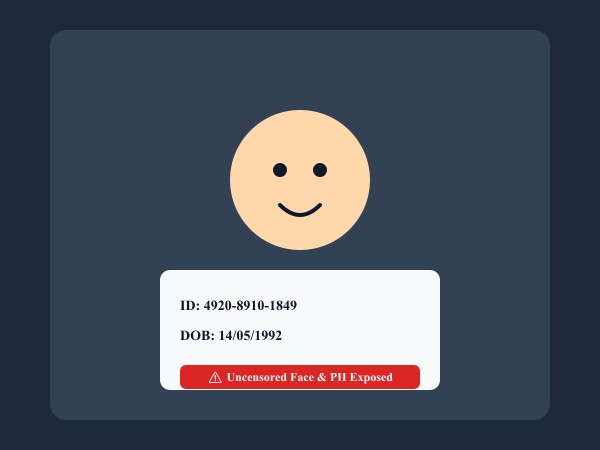
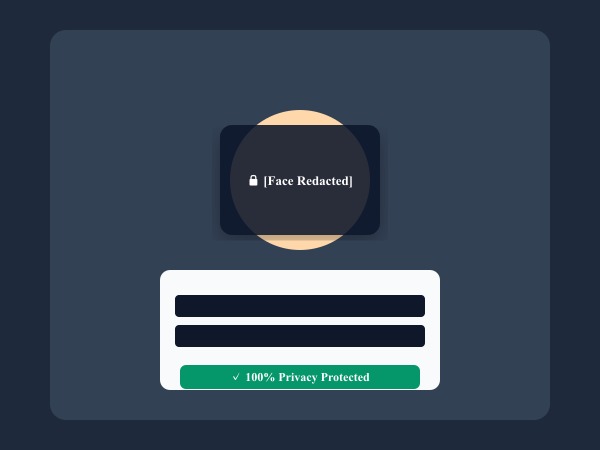
Figure 1: Automatic face detection and censorship bars irreversibly obscuring sensitive personal identifiers and biometric facial data.
Blur Faces & Redact FreeKey Capabilities of ILoveImages Blur Face
Unlike traditional desktop software or cloud-based utilities, ILoveImages Blur Face operates entirely in your browser using modern WebAssembly and HTML5 Canvas technology. Here is what makes this tool uniquely powerful:
- Smart AI Face Detection: Scans pictures locally to detect all faces and applies irreversible privacy blur in a single click.
- HIPAA & GDPR Safe: Zero server transmission guarantees client, patient, and legal confidentiality.
- Dual Censor Modes: Choose between smooth Gaussian blur and retro mosaic pixelation.
- Batch Censor Workflow: Redact sensitive information across multiple documents and photos simultaneously.
How to Blur Faces & Censor Photos in 5 Easy Steps
Follow these simple steps to complete your task in seconds directly in your web browser with zero software installation and 100% client-side privacy:
Blur Faces & Redact Sensitive Info Free
Keep your photos private with irreversible client-side pixelation.
Frequently Asked Questions
Can someone unblur a photo processed with this tool?
No. The underlying pixels are averaged into uniform color blocks in canvas memory before saving, making it mathematically impossible to recover.